
Props in Tabletop Games
Utilizing props is one of my GMing trademarks. I think it is a great way to spice things up and keep a story interesting for the players. Whether it’s a one-shot or a campaign you have run for years, props can help the players immerse themselves more fully into the game world and make events more memorable.
However, before you add props to your game, ask yourself why you are doing it. Think about the type of game you are running. Are the players the type that would appreciate a little extra spice? Are they already roleplayers who may just need a little something extra to inspire them? If you have doubts, you might want to bring it up to them first. There are some types of players (*cough* min-maxers *cough*) that won’t appreciate your efforts. If you think your players would benefit from them, consider the setting and tone of your game. What type of props will best serve your needs?
 Items from the Story

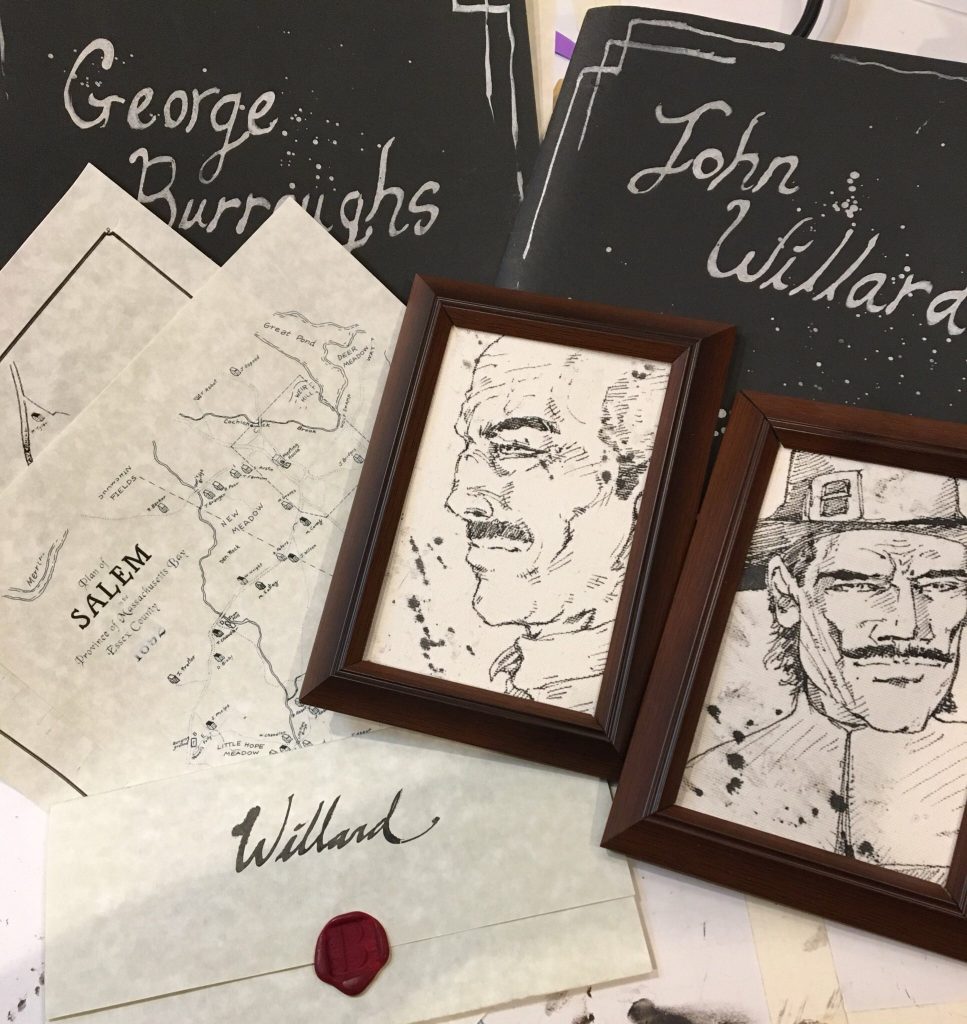
Prop items from the story are easily used by the GM to influence the game. The easiest to make are paper items that the characters need, such as maps, letters, paintings and photographs. When I ran a game set in the Salem Witch Trials, I created individual letters for each character that served as their motivation for teaming up to save their town. They also had maps of Salem on parchment paper. Having a contract or wanted poster in their hands immerses the players in the story. These props are really easy to make with the help of a computer and some parchment resume paper. There are a variety of simple methods for aging paper using common household items if you are running a historical or fantasy campaign. Sealing wax or ink stamps are a fantastic touch to finish off important documents.
Other items can also be used to move the story along and give the players information. Books, jewelry, crystals, potion bottles, and so much more! Use your imagination! I made wands and spell books for a Harry Potter game which kept the table lively and in character. It’s much more interesting for the players to study a real book for clues than to roll dice and have you describe what they notice. Once I used jewelry as a way for the party to identify each other as allies. It’s a great visual for them to reference during the game and then is a great souvenir for them after it is over.
Room Decorations
Decorating the table or your gaming room can be a great way to set a specific tone for your game session and it will help players get into character. I suggest starting with the lighting, because that will make the most difference to the vibe in the room. If your players are in a dungeon or if you are playing something like Vampire the Masquerade with a dark tone, turn down your overhead lights. Bring in some other light sources, like table lamps, so that the players can still read their character sheets. Buying colored light bulbs from your local hardware store is another great way to change up the look of a room without moving too much around.
Decorate your table too! We were delighted when one of our players brought candelabras for our Vampire game. They became such a staple of our game that when we couldn’t burn candles anymore, we replaced them with cheap battery powered ones from the Halloween store. Small things like this can give a campaign some unique character and can be fun for the players.
 Food & Drinks
Providing themed refreshments makes the players very happy. It fills their bellies while also immersing them in the game world. The plates and cups you use to serve the food are also props. I often find myself holding my beverage of choice like my character would hold it, swishing or sipping a pewter mug or wine glass in character as well. There are many resources online with recipes from Star Wars, Lord of the Rings, Star Trek, A Song of Ice and Fire, and other fictional sources. Historical foods are also a great way to add to a campaign. I highly suggest that you test and taste a recipe before serving it to your gaming group!
Costumes
I love costumes, but I am not always a fan of them around the gaming table. Individual items, such as a hat or elf ears, can be a great addition and help a player stay in character. I suggest talking to your group and starting slow. Really consider how each costume piece will add to the game. Goggles or glasses can add a chance for in-character mannerisms, like nervously adjusting them or cleaning them when they are thinking about something. A longsword may be entertaining the first session, but eventually it will probably end up leaning against the wall and forgotten. Full costumes can get uncomfortable or distracting during a game. Plus, why wear a full costume when you only see each other from the table up? Don’t sacrifice comfort and fun to look the part. There are a number of online costume shops that can help find individual pieces for historical and fantasy games, as well as futuristic and science fiction games. I always suggest checking out your local thrift store or Goodwill before dropping a large amount of money online. I’ve put together whole costumes from second-hand stores. You never know what you will find!
 Miniatures
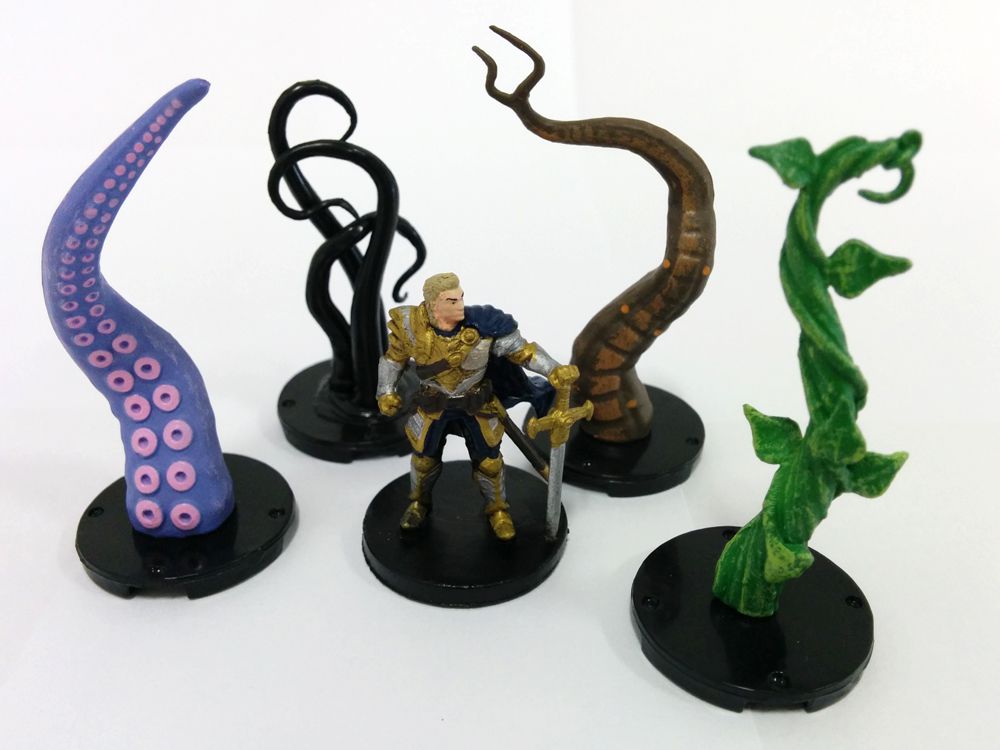
The most common prop in tabletop RPGs are minis. It’s easy to forget that these are props and that they really help with keeping the narrative clear for all the players. The Happy Jacks D&D campaign, Desert of Despair, really made me appreciate how much miniatures help the group visualize what is happening. Having actual spiders or giants to fight, instead of using paper clips or extra dice as stand-ins, can make a big difference. You don’t need to drop a fortune on specific minis for each combat, but using something that is about the right shape is always helpful. If you play D&D or other games that involve miniatures, consider building up a diverse collection of miniature foes for your players to face.
Once you decide that you want to add props to your game, choose carefully! Not all props are created equal! It’s better to add one perfect prop than to drop tons of stuff on the party that will detract from the game rather than add to it. Props will not save a bad game, but if you use them wisely, they can be a fantastic way to add a little dramatic flair to a game.
(This article was first released to Happy Jack's RPG Patreon supporters! Support our show for access to great previews and exclusive content!)
Creating Quality NPCs
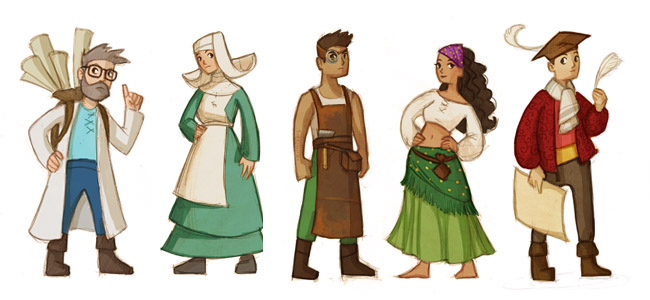 Planning for a game session takes a lot of time. The GM has to anticipate the actions of the players, and do their best to create a story that is challenging and enjoyable. There is a lot of pressure on the GM to create a lot of in-depth content, often with very little turn around time if the group plays multiple times a month. NPCs can be a particular challenge since there are usually a lot of them and players expect them to have personality and depth. So how can a GM create interesting NPCs without spending hours writing their backstories?
The fastest way to give an NPC depth is to skin them over a person or character with which you are already familiar. This trick is especially helpful when the party has gone somewhere unexpected and you have to create characters on the fly. It works with personalities that you know from real life, pop culture, literature, or anywhere else! It’s easy to give the fisherman’s wife personality if you model her after your crazy aunt, or to get the mayor to seem planned if you skin him over your favorite Disney villain. Have a list of NPC names ready, and it’s possible to fool the players into thinking that you planned it all ahead of time!
 Connecting NPCs to characters you already have in the game is another way to add depth and backstory to them, without starting from scratch. By linking the NPCs to an existing character, a NPC or a PC, you give quick backstory and a frame of reference with which the players can judge them. The young girl they find in the forest ends up being the cousin of the farmer they rescued in the last session, or the town guard served in the military with one of the PCs. This is a great opportunity to bring the PC’s backstories into the game, even if it isn’t a major plot point. These causal connections help make your world feel more real and less episodic. As connections build between NPCs, and between PCs and NPCs, it creates a web that It can also throw some great curve balls at the party when they discover old acquaintances in unexpected places. It’s a great game moment when the party realizes that helping that NPC a few sessions back has unexpected benefits now, or the opposite if you are dealing with a band of murder-hobos!
 When you do take the time to create deep backstories for characters, it’s always more fun for the players if you avoid classic stereotypes. Not every wizard has to be Gandalf or Merlin. Not every princess has to be a damsel in distress. Make the princess a trained warrior who helps the party instead of waiting to be rescued from the tower. Maybe the wizard was trying to create an immortality spell and is now permanently an obnoxious teenager. NPCs should have disadvantages and flaws, just like any interesting PC. They should also have odd quirks that, although they don’t influence the story, make them unique in the world you have created. Odd collections of items, distinct clothing choices, physical mannerisms, and catchphrases are all great things to build into an NPC. If you are going to spend the time to create an important NPC from scratch, make them worth remembering!
Complex supporting characters enrich the game world and present the group with opportunities for collaborative storytelling. GMs should see them as opportunities as exciting as any combat session. Challenge yourself to keep things fresh and your players guessing with the use of creative NPCs!
(This article was first released to Happy Jack's RPG Patreon supporters! Support our show for access to great previews and exclusive content!)
Tabletop RPGs: Tips for New Players
"I'd love to play D&D but I don't know how and don't want to mess up the game."
I've heard this statement from many people over the years, many of whom became avid gamers with a little assistance. Playing tabletop RPGs is a lot of fun, but it can also be intimidating for new players. Unlike most board games with a set goal and predicable player experience, RPGs change with every choice that the characters make during the game session.
Not having a "right way" or rails to fall back on can make inexperience players feel unsure and self conscious, but don't let that keep you from joining a game!
Nobody learns to play a tabletop RPG without sitting at a table and actually playing.
You can memorize everything about the game, but becoming a good RPG player takes practice. You will learn as you go, and even after playing for decades you will keep learning from new experiences. Just like the characters we play, we get XP as we go!
It always helps to have some guidance though, and so, I'd like to impart some knowledge that will be helpful to new players.
Who is in charge?
 The Game Master (GM), or Dungeon Master (DM) if you are playing D&D, is in charge of running the game. It is their job to make sure that the game is engaging, follows the system's rules, and that everyone is having fun. They are, in many ways, the "god" of your game world. They create the setting, non- player characters, monsters, situations and everything else that you and your fellow players will face in the game.
It is important to note that the GM does NOT get to make your choices for you.
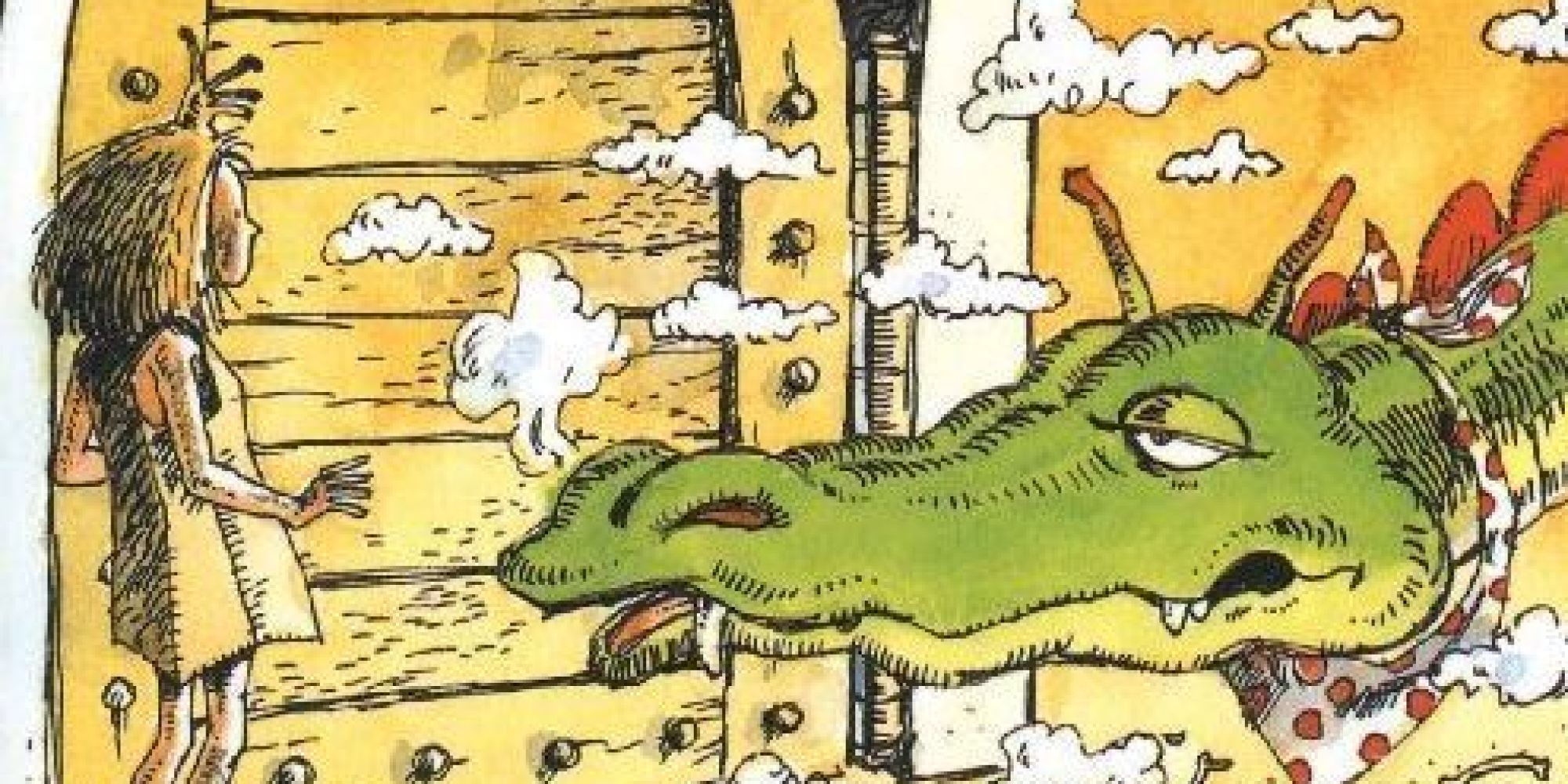
They can create the dungeon with a dragon inside, but they cannot make your character walk in and slay it. That has to be your choice. If you want your character to head to the local tavern instead, you have that right! (But I can't guarantee the GM won't turn around and make the dragon attack the tavern!)
It's a good idea to befriend your GM. They are the best resource for everything related to your campaign and can help you with any questions you have along the way. Work closely with them as you learn the system and show your appreciation for all the hard work they put in to keeping the game going. You show up and play once a week, but they spend hours prepping before every session. Without the GM, there is no game.
How do I build my character?
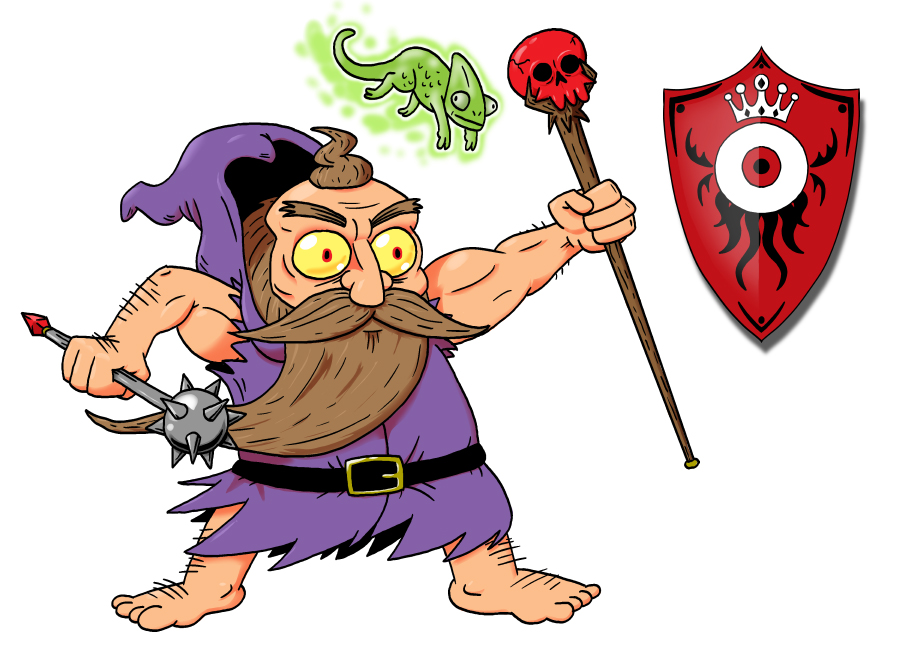 I could write a whole post about creating a character (and I probably will in the future!) but for now, I will try to keep it short and sweet.
Talk to your GM before you start making your character and ask for their advice. Different games have different flavors and you don't want your character to bring a gun to a magic fight, or be an evil character in a group of holy paladins. Or maybe you do want that, but you should get permission from your GM before adding that type of complexity to the game.
All systems have a set of mechanics to help you build a character's abilities, so make sure that you read that section of the players handbook thoroughly. If you have questions about the process, your GM and fellow players are your best resource to help you make your character. There are also many online forums where you can ask any questions that you might have during character creation.
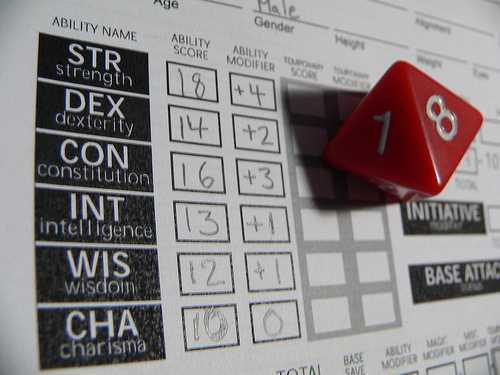 Make sure that your character's stats (strength, intelligence, etc) support the skills and abilities that you select for them. For example, most fighters will need a lot of physical stat points, such as strength and constitution, while magic users or investigation types will need more intellectual stats. It's not helpful to have a fighter who isn't strong enough to wear their armor! Chose your stats and abilities wisely, because they change slowly once the campaign starts!
Next, develop your character's personality. Hopefully, you had something in mind while you were working on his/her stats and skills. Some game systems have personality stuff built in to character creation which give you a basic framework for a personality and back story. If so, great! Just use that as a basic structure and add in some smaller details. If not, you have a bit more to do to create your character.
What can my character do?

Your character can TRY anything that you'd like, but they won't always succeed. Take chances and think out of the box. Every problem should have multiple solutions. Success is determined by your dice rolls and the GM's choices. Choose wisely! Saying, "I shove a sword up his butt!" may not be as funny as you expect when it actually happens in the game.
Be an active participant!
Tabletop RPG game sessions can last a long time, usually several hours for a single session. The time can sometimes pass slowly, especially during combat, it's important to take an ACTIVE interest in everything that is happening during the game. That means listening and participating in character, maybe even taking notes so that you can remember important details later.
Combat can take time, but it's important that you are paying attention to what other players are doing on their turns!
There is nothing worse than being in the midst of a difficult combat and having a player do something useless because they have no idea what the last player did on their turn. Be aware of what players are doing so that you can make good tactical choices and contribute to the battle!
What is metagaming? Why is it bad?
 Metagaming is making decisions based upon out of game knowledge. For example, you saw your GM's notes and know that there is a dragon in the dungeon. If you have your character avoid the dungeon, you are metagaming. Your character doesn't know there is a dragon waiting to eat you. You are using PLAYER knowledge to make a choice in game, not CHARACTER knowledge. For obvious reasons, metagaming can really mess up a game. DON'T DO IT!
Ask Questions!
Nobody expects you to know everything! Asking questions, in character or out of character, is a natural part of the game. Everyone does it, no matter how long they have been playing. Why do you think gamers carry around the game rule books all the time?

What Can We Learn from #GamerGate?
 Since August, the internet has been in an uproar about the #gamergate controversy. It seems that everyone has a different opinion about the point of the movement and its impact on the industry. Regardless of what the parties involved intend, and the horrible behavior of jerks abusing the anonymity provided by the internet, there are two main issues that should be pulled from this clusterfuck and more closely examined.
1. Ethics in Journalism
Regardless of your feelings about the #gamergate movement, this is an important issue that shouldn't be ignored. When I was a teacher, I always warned my students about the information available on the internet. The internet gives us incredible freedom to express ourselves and share our opinions, however there are no controls in place to vet websites, online authors, or their works. Anyone with an internet connection can start a website or blog and post whatever they like.
This isn't always a bad thing. Many online authors, including myself and many of my friends, are passionate fans who simply want to share what they love with other fans. These grassroots writers are often considered more credible since they are "of the people" but sometimes that can make it harder for them to stay objective. When you are a fan of something, it's tempting to feel like you are legitimately connected to it or dream of getting paid for writing about it. Companies are getting savvy about giving review copies, merchandise, special access to events, and even job opportunities to reviewers/fans who can have a positive impact on their sales. One recent example is the Shadow of Mordor marketing company, Plaid Social Labs, 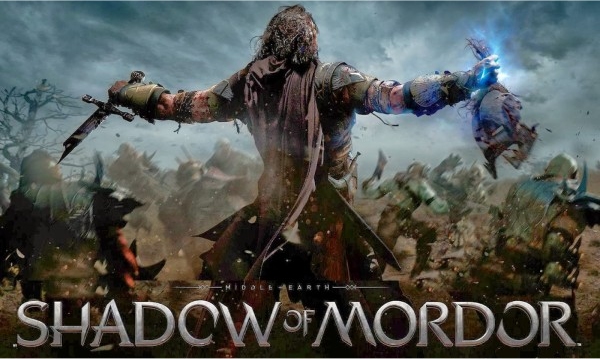 who only provided advanced copies of the game to approved reviewers who signed a lengthy agreement that stipulated a positive review, specific social media promotion requirements, and gave the company final approval over any videos reviewing the game.
While conflicts of interest and quid pro quos are not a new problem in journalism, it is new to have so many well-known online commentators who lack the ethical training that comes with a degree in journalism. We need to start demanding transparency from online sites and their contributors, especially in a world where more and more purchases are based on the information we gather online.
2. Misogyny in Gaming
There is no denying that #gamergate has been inextricably linked with horrific threats against a number of women in the gaming industry. Regardless of whether the people involved in these attacks are really part of the #gamergate movement or assholes just using it as an excuse to behave like monsters, this issue should be taken seriously by everyone in the gaming community. Nobody should be subject to threats such as these simply for being an outspoken woman in the gaming industry.
 The very essence of these threats is to dominate the women involved and to scare them so that they don't speak out about the often unfair conditions in the gaming world. Graphic descriptions of rape seem to be a special flavor of threat that asshats save for women. Thanks for that.
This problem predates #gamergate, as seen with Anita Sarkeesian and her Tropes vs. Women in Video Games series, which first started getting online attention with her incredibly successful Kickstarter project in 2012. Even if you don't agree with all the arguments she presents in her videos, the horrific responses from enraged video game fans over the past few years has been shocking. She has repeatedly been driven from her home and threatened with graphic rape and death scenarios, simply for stating her opinion of how women are treated in video games on her own YouTube channel. 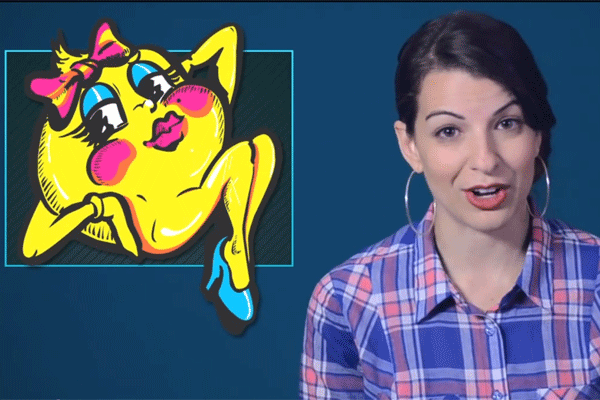
As a woman, I have faced misogyny in gaming, usually at conventions where I am interacting with strangers. It's disheartening and makes me feel like I don't belong, even when I'm the one wearing the GM Volunteer badge. I can't imagine the courage it takes to face violent threats from strangers who know where you live. We need to stand together and loudly voice that we will not tolerate this type of treatment towards ANYONE in our community. Trolls and predators should not be ignored, but should be vehemently told that they do NOT speak for us.
If the gaming community can take a step back from the drama and conjecture of the #gamergate controversy, we could learn from recent events and become better for this whole awful experience.
Herding Dragons: My Wild Talents Con Game
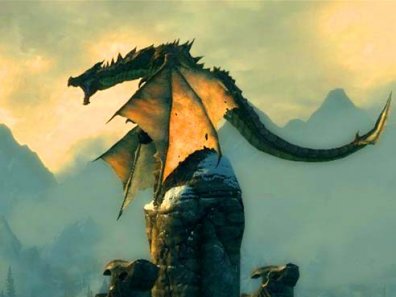 I love adding a unique twist to my convention games, and my Wild Talents game for Gateway 2012 was no exception. Months earlier I had been inspired to set my game in the world of Skyrim (mostly because I was playing it every waking moment), but I wanted to give my players a completely unique experience. A major role reversal was in order.
When my players arrived, they were greeted by my trademark gaming table. I've had other GMs scoff at my admittedly overdone layouts, but I 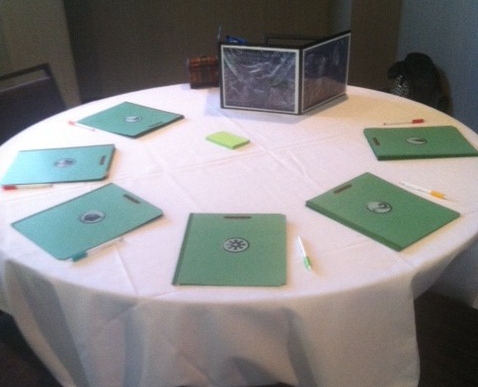 find that players really appreciate the amount of preparation and it starts everything on a very positive note. Folders were laid out on the table, each one labeled with a symbol that represented the character that lay within. I never let players see the character sheets before a game, so these symbols were the only clue they had to choose their folder. I find that this forces players out of their usual go-to roles and really ends up stretching their creativity during the game. It also negates the show-up-early-to-get-the-best-character strategy.
I gave a brief description of the setting, carefully avoiding giving away the big surprise I had in store for the players. Skyrim is a typical fantasy setting with a bit of Viking flavor thrown in for good measure. Wizards and warriors are commonplace, and dragons are the enemy of mankind. Many of my players were very familiar with the video game and had a very set image of what they were expecting from this game. Boy, were they in for a big surprise! After my explanation, I let them open their folders to see the portraits of their characters.
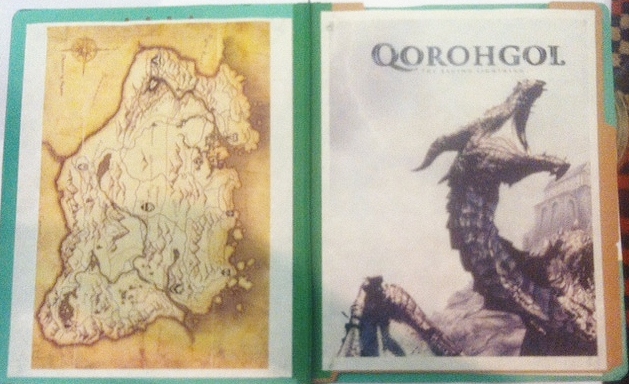 The reaction was amazing. The players were shocked, delighted, and a little thrown by the dragons that greeted them when they opened the folders. Each dragon had a unique "thu'um", a magical phrase in the language of the dragons, that gave them thier powers and the dragon's name was translated from Skyrim's dragon language to reflect their powers.
- Fendufyn, “The Devouring Bane”, was the biggest of the dragons and had a thu'um that turned his skin to stone.
- Qorohgol, “The Raging Lightning”, had skin that became electric, and electricity is VERY dangerous in Wild Talents.
- Haslovaas, “Song of Health”, was the most intelligent of the dragons, and had the ability to turn ethereal and heal through his thu'ums.
- Strunduving, “Storm-wing Devourer”, was the smallest and fastest of the brethren, with a thu'um that gave him super speed.
- Yolvolun, “Fiery Night”, was another of the bigger dragons and had a ranged thu'um that shot fire at any unlucky targets.
- Lizinjot, “The Icy Maw”, was designed as the counterpart to Yolvolun, with capable physical stats and an ranged ice thu'um.
I explained that they were young dragons who had hatched together, but had never seen any other dragons, including their parents.
One of my important GM strategies is to leave personality information off the character sheets. Yep, I don't tell them who they are. I specify important connections to other PCs (family relationships, similarities, past history, etc), list their stats and powers, but I let the player assemble all this information into their character's personality. Most players are totally thrown when they sit down at one of my convention games for the first time, but I find that it actually increases the role-playing at the table. Instead of forcing a square peg into the round hole I created, the player is able to form a peg they are comfortable with and that fits in the hole that the party creates. Players are incredibly creative and come up with great ideas that would never have occurred to me. This also increases the player's personal investment in their character and the game as a whole.
Now this game could have gone one of two ways. The choice that many players would have gone with would be the majestic, wise, and ancient dragon route. My players shunned that for the more quirky, Looney Tunes meets The Three Stooges style game. They decided they were all adolescent brother dragons and immediately started beating on each other and looking for girl dragons. Yep, they rolled initiative and started wrestling in true brotherly fashio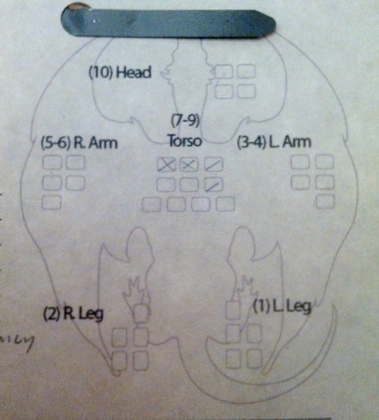 n. Although it was unplanned, it served as the perfect introduction to the Wild Talents combat system and really started the game off with a bang.
The Wild Talents system ended up being a perfect fit for this game. I was able to create powers that actually matched the dragon thu'um powers in Skyrim, as well as give the dragons stats that were appropriate for their species. It also worked to create the HUGE number of NPCs that the dragons eventually fought. WOW, do six teenage dragons plow through human NPCs! As always, the players ended up really enjoying the Wild Talents combat system. I did learn that I need to color code the NPS sheets for the next time a run an overpowered game like this, to make managing the large number of them easier! Better living through office supplies!!
As we moved through the story, I was absolutely floored by the level of role-playing in this game. My games are all very open, "sandbox" type worlds that encourage lots of role-playing and player empowerment, but this group took it to the next level. I was 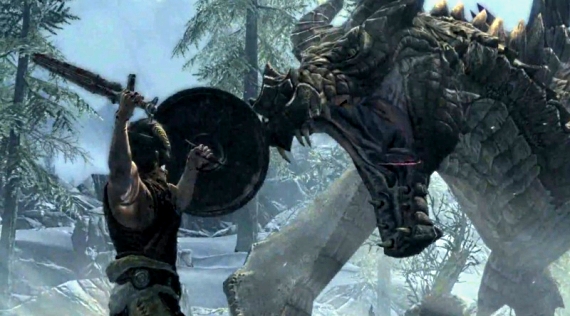 basically just along for the ride. Without pre-generated personalities to confine them, each player came up with an amazingly vibrant and unique personality for their adolescent dragon that matched perfectly with their stats and abilities. They fought with each other constantly (what else would teenage brother dragons do?), but were also very protective of one another when danger threatened. There was never a dull moment, and watching the players revel in being the dragons and not the bite-sized humans for once was a delight.
All the role-playing did take a lot of time though, and there is no time to waste in a convention game. Taking the advice of the Happy Jack's RPG podcast crew, I had designed my game in modules to provide more flexibility in the story. There were five total parts or scenes to the story. Scenes one and three were vital to the story, but scenes two and four could be skipped if we were running short on time. I had multiple plans and NPCs prepared for the finale (scene five) so that the scene could be quickly adjusted to fit the remaining time in our convention game. This high level of flexibility takes more prep time, but it allows the game to run seamlessly during the convention and lets the players resolve the game in the allotted time. It also allows the GM to run the game again and enjoy a completely different experience. Even with all the freedom the players had in this game we ended almost exactly on time.
I could tell the game was a huge success because everyone left the table as friends, and many of them were actually tweeting to each other in character for many days after. It was an amazing experience and I was truly honored that Fray, Stephen, Will, Kurt, Matt, and Sam all chose to be part of my game. They are incredible gamers and I hope to see them at my table many times in the future.
If you'd like to read the play-by-play of this game from a player's perspective, read Matt's blog post about the it at Monkey in the Cage.

Empowering Players
 We all have seen players completely take their GM by surprise. Usually, the GM has planned one or two specific ways for the players to handle a challenge... and the players try something completely different. This creates a crossroad for the game. Is the GM willing to consider alternative solutions to the problem?
The answer should be "yes."
I'm not saying that the GM should always give in to what the players want, but they SHOULD be open to considering logical solutions other than the ones they planned. When the players' options are allowed, the game changes from the general mice in a maze scenario to a game where players are empowered. The players can stop looking for the "right answer" and really approach the problem from their character's point of view. The mere possibility of creative success supports the role-playing aspect of a game.
 As a GM, there are some important things to keep in mind with this concept. Mainly, just because you let the party try something, DOESN'T mean it has to work. Maybe their logic is off, maybe there are some factors they aren't aware of, or maybe they just roll badly. Let them try it, and let them pay the consequences if they fail. However, if their logic is sound and they roll well, they should be rewarded with success. They shouldn't fail just because it's a different solution than you planned.
I saw a great example of this in a recent Pathfinder game. The party was on a pirate ship and planning a mutiny, but they wanted to take out as much of the enemy crew as possible quietly. They decided poison was the best way, but none was available on the ship. They came up with the idea of summoning a viper and milking it for its venom. Although the summoned creature only materialized for a short period of time, they rationalized it by citing the rules that stated anyone poisoned by the viper would stay poisoned after the animal dissipated, thus, the poison didn't dissipate with the creature. The surprised (and delighted) GM ruled in their favor, and a bunch of cruel pirates died mysteriously after their nightly ration of rum.
Keeping your game off "rails" will really benefit the players and the GM. It will encourage the players to explore the world that you create, and to deeply embrace the character that they are playing. The GM gets to enjoy watching the players revel and fully explore the universe they created.
(This article was originally posted on CharismaBonus.com)
Dealing with Player Ignorance
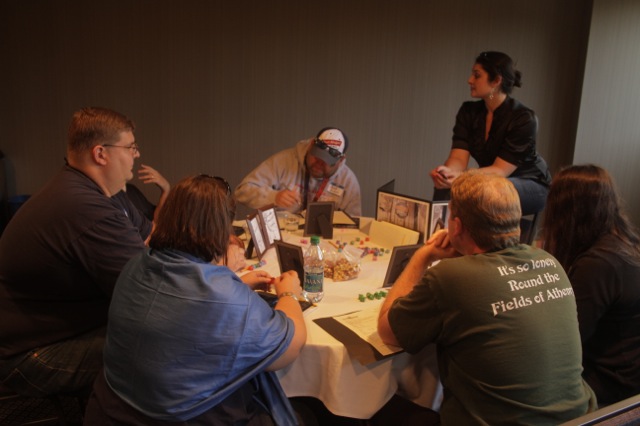
I have GMed many convention games, but I ran into a new problem a few months ago. One of the players in my game had a fundamental misunderstanding of a pretty simple scientific principle. I will not go into specifics because I do not wish to embarrass that player or narrow down which game I am discussing.
The players were engrossed in the game and having a blast trying to come up with a solution to my challenge. They were all great people and it was a very positive game, however suddenly one of them suggested an action that defied the laws of physics. Two other players jumped on board, and the remaining players looked at me with their eyebrows raised.
I casually asked for clarification, hoping they'd catch the mistake themselves. No luck, so I very politely questioned their logic, asking if that was really what they meant to say. Surely, their basic elementary school knowledge was just a little rusty, right? Wrong. They defended their position, restating their faulty understanding of earth science. The logic behind their actions was sound, they just didn't state the right materials to do what they wanted. I was at a crossroad, do I impose my scientific understanding on the game to insure it's correct and risk embarrassing the player, or roll with it and prioritize fun over academic correctness?
Against ever instinct in my teacher body, I rolled with it. Why? Well there were two main reasons.
First, I didn't want to penalize the characters for the players' ignorance. They had found a good solution, but simply did not have the scientific background to choose the right materials to make it work, even though the materials were available to them. Often we play characters with knowledge or qualities different than our own. Shy players can roll skills to give speeches and technology dummies can roll to hack computers, so it didn't seem fair to kill their creative idea when their character would have known exactly the right material to choose.
More importantly, I didn't want to kill the fun. It was a one shot game with people I didn't know well. If it had been my normal gaming group, I might have argued the point and then bought the player a beer. I didn't know these players well enough to push them. They might have gotten mad and walked away, or been perfectly polite but not enjoy the rest of the game. We were all there to have a good time and it seemed pointless to risk that over a small mistake in their plan. That said, if this had been a campaign I would have pressed the point because I wouldn't want the physical laws of my universe to be altered long term, but again, I would know players in a campaign game enough to debate it with them.
Did I make the right choice? I still ponder that question. The game finished smoothly and everyone seemed to enjoy themselves, but maybe they would have enjoyed themselves if their plan had failed. It really boils down to an individual's personal goals for the game. Mine was for my players to enjoy themselves, and I succeeded, but I might not make that same choice again.
Oh, and after the game I casually brought it up to the player privately and suggested they look it up when they got home. The teacher side of me couldn't give up completely.
System Spotlight: Traveller
Are you a fan of Firefly? Do you love the idea of gunslingers on the edge of civilized space? Traveller might be the game for you! In fact, Firefly is so similar to the Traveller universe that I would bet money that Joss has played in a campaign or two.
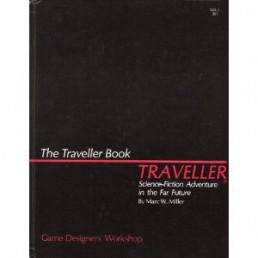
Traveller (yes, it's spelled like that) was first published in 1977 by Game Designers Workshop. It's a d6 system, but the dice mechanics vary slightly from edition to edition. I suggest the Mongoose version of Traveller, which is a 2d6 system where you usually want to roll high.
Originally, Traveller had no specific setting and was meant to be a generic system for all types science fiction gaming. It can still be used that way, but modern Traveller also has one of the most developed settings in the RPG world. There are THOUSANDS of complete star systems already designed and mapped out. People have not wasted time since 1977! Each of the tens of thousands of planets is planned out to include the important physical, social, and economic information about that planet. Check out travellermap.com for a fully functional map of the universe that can easily be used in your game.
 The Official Traveller Universe is the "Third Imperium", a human-dominated feudalistic society of worlds. Everything in the Empire is run by a class of nobles, but as you get farther and farther from the center of the Empire, things become less civilized and much more wild west! There are multiple races, but it is a human-centric game. The most interesting tidbit about the setting is that while ships can travel pretty quickly through systems, the center of the Empire is many months or even years away from some of the outlying systems... and communication cannot go faster than the ships. If you are out of range to contact someone via communicator, you have to send them a message via a courier ship, also known as an X-boat. This may seem like a big damper on the sci-fi aspect, but it adds so much to the game. This is what lets the outer reaches of the Empire be a pretty wild and lets your crew avoid arrest by staying one jump ahead of the arrest warrant, or make some good money if you end up on a good X-boat. (See? I told you it was like Firefly...)
 Without a doubt, everyone's favorite thing about Traveller is the character creation system. The player gets to make choices during creation, but everything really comes down to die rolls. It's almost a separate game unto itself and gives players a skeletal back story for their character, including ties to other members of the party and skills they have learned along the way. The dice determine that you left military service with PTSD, but it's up to the player to flesh out the story. Are you devoted to another player because they saved your life? Do you hate the Navy for sending you to die? If you approach it with an open mind you can get an incredible character that you would never have created without the help of the dice.
The Traveller Core Rulebook is all you really need to run a game, although there are other Traveller books available if you end up wanting more options. Try it! It rocks!
(This article was originally posted on CharismaBonus.com)

Comprehending Cross-Gender Characters
Cross-gender role-playing can be a controversial topic at the gaming table. Opinions are as varied as one could imagine and while some gaming groups are very open to cross-gender characters, other groups are flat out against it. So why is something that has been around since role-playing began such a big deal?
Women are partially to blame. The number of female tabletop gamers has been growing for many years and co-ed games can make people uncomfortable with portraying the opposite sex. After I posed the question on Twitter, one man likened it to faking a British accent with a British person at the table. The pressure to "do it right" can take a lot of the fun out of role-playing, even if the other players at the table aren't judging you. I was very worried about portraying a man "right" the first time I cross-gender role-played, and it showed. It was our third or fourth session before I really hit my stride and stopped second guessing myself before speaking. I've seen the same thing happen with men playing female characters. Social pressure can paralyze a person's creativity and role-playing ability.
Everyone worries about being judged by others, and good communication is the key to insuring that everyone enjoys your game. If you are worried about insulting a person in your game by portraying the opposite sex, warn them ahead of time. Please notice, I didn't say to ask permission, because only the GM should have the power to veto a character concept. Just give the other player a heads up, and if it's your first time playing a cross-gender character, maybe ask for some tips. In my experience, it doesn't matter if you screw up from time to time. If it's obvious you are really trying to create a cool character most people will be very supportive.
Sadly, there are those people who seem to play cross-gender characters just to make other players uncomfortable. I have seen this happen with players of both genders, but I think it's more common for women to be upset in this way. Usually, this happens when you are in a gaming group of people that you don't know well. Now, really insulting a normal, reasonable gamer is harder than you'd think. Playing an unintelligent woman who loves shoes isn't necessarily insulting to women (or original), but playing an unintelligent woman who trades sexual favors for shoes every time the party stops in town is something else. The difference is that the player is taking a specific action to demean the character in a way that relates to their gender. As a woman, I can forgive someone for playing a little bit of a stereotype. I cannot ignore someone treating a female character as a sausage wallet to satisfy their own sexual or misogynistic fantasies.
If you are uncomfortable in a game talk about it. Ninety-seven percent of gamers are great people who are not setting out to insult you. Usually if you can have a calm conversation they will try to fix things in future games. If you are not comfortable speaking directly to the other player or if the other player doesn't agree with you, speak with your GM. You are as important as any other player at the table and if someone's role-playing is making you uncomfortable, it's important that the situation is fixed. Be logical, non-judgmental, calm, and have the first conversation in private. Nobody likes to have their mistakes pointed out in front of their friends, so having the approaching them in private increases your chances of really being heard. Also, take action immediately when something unacceptable happens at the table. Get in touch with the player or GM after the session or when your group takes a dinner break. If you say nothing, you are setting the precedent that things of that nature are acceptable. It's sad that some boundaries need to be pointed out, but to be perfectly honest, some gamers need help with social cues and understanding that some actions aren't ok, even if they fit with their idea of a character. (Sheesh, there I go stereotyping...)
What is the most important thing to remember about playing with cross-gender players? Relax. Don't try to psychoanalyze them. It doesn't mean that they are homosexual, have penis/vagina envy, mommy issues, need to get laid, or anything else. Most players just try it as a change of pace or for a new challenge. If you aren't interested in playing a cross-gender character, fine, but be open minded with those who want to try it. The purpose of gaming is to enjoy ourselves. Some of us do that by playing characters very similar to our real selves, some of us love to try out completely different personalities for a few hours. Whatever your preference, the purpose is for everyone to have fun! It is a game after all.
(This article was originally posted on CharismaBonus.com)
Jumping into GMing
GameMASTER. The title itself has a way of excluding about half the population, and that fact is reflected in every game shop and on every convention floor. The number of female gamers may be rising, but the number of female GMs is still pathetically low by comparison. This has to change if we are going to continue to grow as a demographic.
GMing is something that every gamer should do at least once. It's an incredibly educational experience, and even if it doesn't end up being something that you stick with, you will be a better gamer for giving it a try. I was terrified the first time I ran a game, and consequently over prepped my game. It was a 4e game, based in a fantasy ocean world that I created called Nenesto. I had such a blast coming up with the NPCs, the cultures, and the challenges! I completely fell in love with the creative process and the power... THE POWER!! MWAHAHA... ahem. To date, I have run more than twice as many convention games as I have played in. Once the GMing bug bites, it doesn't let go, girls!
I have never run an adventure path or company published scenario for a group of players. I know that a lot of GMs start this way, and it can be very enjoyable. I've had a blast playing in many published campaigns, but I find that it is harder to run a game like that than just create my own world. No, I'm not crazy. Actually, I would argue that it would be easier for most people once they got over their fear of trying. Think back to when you were a kid. You had to study and practice the information that people gave you to learn, but you always could remember the smallest details about the stories, games, and worlds that you dreamed up yourself. It's much the same with self-created gaming worlds. I created the details of the world, so it's harder to forget them or mess them up... and if for some reason I do mess up, it's really easy for me to change to world to accommodate my mistake.
But how does one start to attempt such a daunting task as creating a game from scratch? First, you need to find a group of (kind) players. I was lucky enough to already have a gaming group that encouraged me to try GMing, but if you aren't so lucky, try recruiting friends and family members. Even if you end up running a game for two people who aren't gamers, it will be great practice and break the ice for you. Actually, running your first game for non-gamers has it's advantages. They are less likely to notice your mistakes, and you get a lot of practice explaining the system mechanics to them. I do not recommend running your first game for a group of strangers at a gaming store or convention, because you never know what type of players you will get.
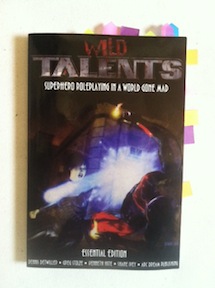
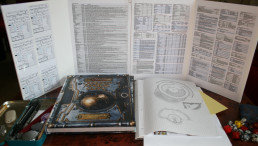
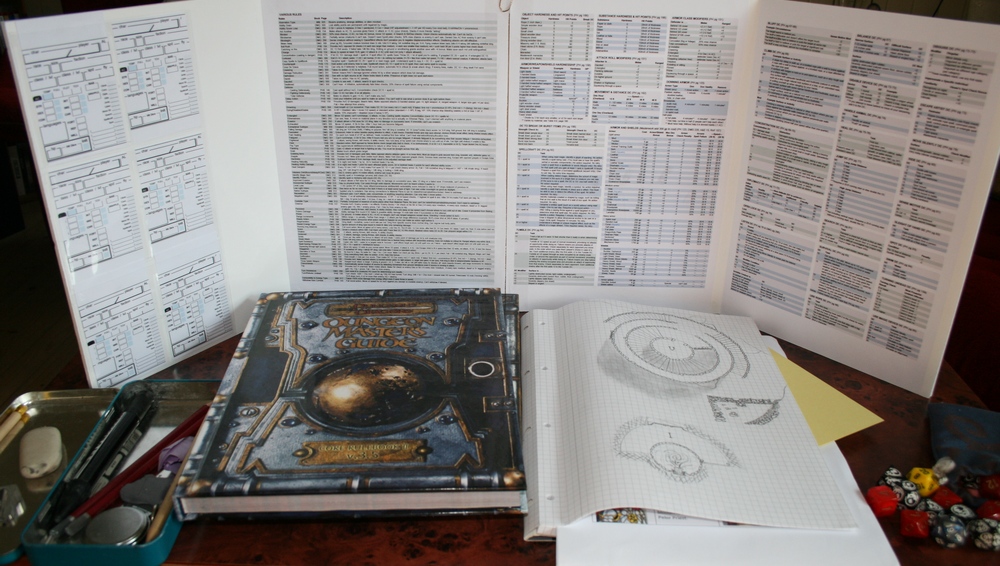
After you have your players, pick your system. It should be a system that you are pretty familiar with, ideally one that you have played a lot. I recommend this because the more you know about the mechanics of a system, the easier it will be to tailor a good story around it and keep your game running smoothly. Have most of the basic combat and skill stuff memorized or on cheat sheets so you don't waste your players' game time looking stuff up. Cheat sheets are your friend! I'm convinced that's why the GM screen was originally invented. Another great trick is to have more obscure combat rules other important information marked so you can easily find it. Your mind will go blank at some point and it's great to be able to quickly find that info. My Wild Talents book is covered in multicolored sticky tabs for this very reason. Your players will appreciate your efficiency and be impressed that you are so prepared. Make no mistake, they will always do the one thing that you can't remember the mechanic for... darn players!
Step three, create your world based on something you know and love. Most likely the system you picked has errata with details about races, monsters, kingdoms/cities, etc. Feel free to use it or lose it. Don't feel that because you are running a DnD game that you HAVE to have dwarves, elves, and all the usual DnD suspects. Maybe your world only has humans, or maybe it takes place completely underground in the dwarven cities. It is YOUR world. Also, don't be afraid to go in a completely different direction than the game designers intended. One of the most successful games I have ever run was a Wild Talents game (a superhero system) about the Salem Witch Trials. The poor puritans started developing powers and panicked because they assumed it was the devil's work. What made it so great? I picked something I knew well and was passionate about. I'm a history teacher by day, and my love for the setting made the players equally passionate. You know your game is a success when they are standing up in the middle of a convention room yelling at each other completely in character, and completely oblivious to the other games around them. It's those moments that I live for as a GM. Do you know everything about Tolkien's elves? Are you a huge Firefly fan? Could you write encyclopedias about vampires in your sleep? Those will be your most successful games. (This also comes in handy when you have a really knowledgeable player! One of my players for the Salem game had recently taken a class on the Witch Trials, so it was a good thing I knew my stuff!)
After you have your system and your world imagined, start refining it into a (somewhat) linear plot. Just like writing stories, start with a basic outline and then slowly add in the details. For your first time, stick to a one-shot game that can be completed in four to six hours. Remember, the world that you created can be used again and again so all that prep isn't a waste for one game. Your adventuring party might save a specific kingdom from a demon, but there are many more kingdoms for them (or other players) to explore! Don't feel like you have to cram all of your creative material into one game. Keep it secret, keep it safe, then use it later.
I will be providing more helpful advice on GMing specific types of games in future posts, but the first step is always the hardest. Don't be afraid to "borrow" ideas from your favorite source material and realize that you will make mistakes, and that is ok! Be secure in the knowledge that EVERY GM screws up sometimes, and jump in with both feet.
(This article was originally posted on CharismaBonus.com)